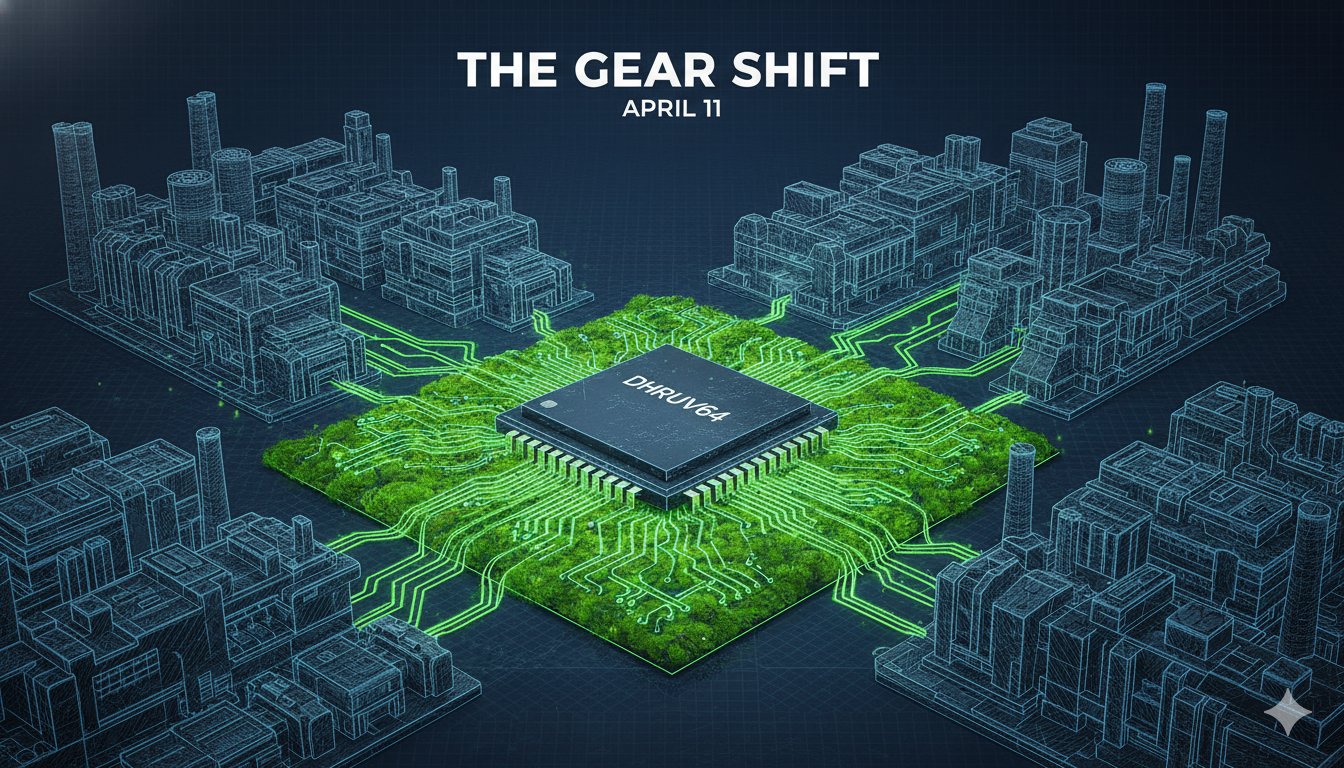
If you have been following the news lately, you’ve likely heard the buzz about India’s “semiconductor moment.” But I want to take a step back and show you why this isn’t just another policy cycle. It is a fundamental restructuring of India’s place in the global technology order. I’ve spent time digging through the latest developments, and what I see is a nation moving from the sidelines of “assembly” to the front lines of “innovation”.
Here is your comprehensive roundup of the semiconductor surge, my take on what’s happening, and why you need to pay attention.
The ₹1.2 Lakh Crore Bet: Moving from Capacity to Capability
The biggest news I’ve seen this week is the Ministry of Finance clearing a massive ₹1.2 lakh crore outlay for the India Semiconductor Mission (ISM) 2.0. If you thought Phase 1 was ambitious, Phase 2 is a total “rewrite of the playbook”.
I believe the most significant shift here is the move away from just building “fabs” (factories) to focusing on indigenous Intellectual Property (IP) and advanced technology nodes. We aren’t just looking to manufacture chips for others; I see a clear path toward India designing its own full-stack semiconductor IP.
The Market Context You Need to Know
To understand the scale of what I’m talking about, look at these projections for the Indian semiconductor market size:
| Year | Market Size (USD Billion) |
|---|---|
| 2023 | $38 Billion |
| 2024-25 | $45-$50 Billion |
| 2030 (Projected) | $100-$110 Billion |
Data sourced from Ministry of Electronics and Information Technology
Real Boots on the Ground: Sanand Becomes a Hub
It’s easy to talk about billions in funding, but I know you want to see actual products. On March 31, we saw Prime Minister Modi inaugurate the Kaynes Semicon OSAT facility in Sanand, Gujarat. This plant is already testing and packaging six million chips per day.
Even more impressive to me is Micron Technology’s grand opening. They have already shipped their first made-in-India memory modules to Dell Technologies for laptops made right here in India. This is a “proud moment” that proves the ecosystem is actually operational.
The Tata “Vote of Confidence”
I’ve been watching the financial side of this closely, and the Tata Group’s recent move to raise $735 million from five major international banks (including HSBC and MUFG) is a massive signal.
You should realize that these banks are not “casually optimistic”. They require strict protections, like Tata retaining 51% ownership, which tells me they see this as a high-stakes, high-reward industrial promise. While these chips (28nm to 110nm) won’t power your next smartphone, they are the “core components” for cars and air conditioners that keep the global economy moving.
The Evolution of the Mission
I’ve put together this comparison to help you see how the government’s strategy has scaled up:
| Phase | Allocation | Strategic Focus |
|---|---|---|
| ISM 1.0 | ₹76,000 Crore | Manufacturing incentives & attracting 10 approved projects |
| ISM 2.0 | ₹1.2 Lakh Crore | R&D, Design, 2nm/3nm nodes, and ecosystem expansion |
Beyond Manufacturing: Designing the “Brain”
If we want true “technological sovereignty,” I believe we have to design the microprocessors ourselves. I was thrilled to see the launch of DHRUV64, a fully indigenous 64-bit microprocessor.
Why does this matter to you? India consumes nearly 20% of global microprocessor output. By building our own secure, homegrown platforms like DHRUV64, we reduce our long-term dependence on imports.
The Talent War: Who Will Run the Fabs?
You can’t run a $100 billion industry without a massive workforce. I’ve noticed a surge in industry-academia partnerships, like the one between SASTRA University and Tata Electronics.
They are launching specialized degree programs to bridge the “manufacturing middle” gap. With the Chips to Startup programme now reaching 397 universities, I believe we are finally seeing the groundwork for a “future-ready” workforce of 100,000 engineers.
The Reality Check: Hurdles and Headwinds
I wouldn’t be giving you a fair roundup if I didn’t mention the risks. The $10 billion project between Tower Semiconductor and Adani in Maharashtra has been temporarily put on hold. Internal reviews cited concerns about “commercial feasibility” and the fact that India currently only accounts for 6.5% of global chip demand.
Furthermore, I am concerned about the “Hormuz Shock”. The conflict in West Asia has sent Brent crude up 35%, which pushed the rupee to a record low of 94.78 against the dollar. For an oil-importing nation like ours, these external shocks can dampen the capital expenditure needed for high-tech growth.
Summary of Key Players
To help you keep track of who is doing what, here is a quick look at the major approved projects:
| Company | Strategic Move | Investment |
|---|---|---|
| Tata Electronics | Fab plant (Gujarat) + Packaging (Assam) | ₹1.18 Lakh Crore (Combined) |
| Micron Technology | First Assembly/Test facility in India | $2.75 Billion (Combined) |
| Kaynes Semicon | OSAT facility in Sanand (Operational) | ₹3,307 Crore |
| CG Power | OSAT facility with Japan’s Renesas | ₹7,584 Crore |
My Final Take
I see ISM 2.0 as a definitive statement of intent. We are moving from “policy vision” to “global positioning”. While global energy crises and project pauses remind us that the road is long, the momentum in talent development and domestic chip design is undeniable. If you are an investor or a tech enthusiast, this is the time to watch the “structural transformation” of the Indian economy.
What do you think? Is India’s design talent and government backing enough to overcome the high capital risks? Let me know your thoughts!